You'll find some differences of opinion on this. At one end of the spectrum we have the dump it and forget it crowd. They dump the charcoal into the cooker straight out of the bag, just being careful not to dump the bottom of the bag (dust and chips) into the cooker. At the other end of the spectrum, you'll find those that completely remove all the old lump, clean out all the ash, and then build a whole new fire. And to do this, they will sort their lump charcoal, putting the biggest pieces on the bottom, fitting them together like a jigsaw puzzle, and using smaller pieces as they build the pile of charcoal up.
We are sort of in the middle. Well, ok, we are sort of towards the sorting end of the spectrum. We empty all the old lump out. We put several big pieces in the bottom of the fire, and we then add more lump carefully, making sure to use only pieces that are big enough to leave lots of air spaces between pieces. We don't do the jigsaw puzzle thing, however.
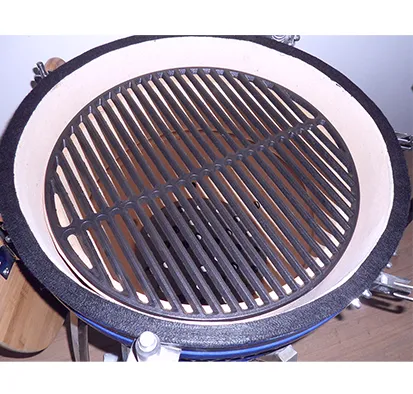
Once you have determined which end of the spectrum you want to pursue, there is one other word of advice. Use plenty of charcoal. Don't be shy. You don't want to run out. We fill our cooker up about 1/2 way up the fire ring. It's better to have too much than to have your fire go out.
Assuming that you want some smoking chunks in your fire, we like to bury some chunks in the pile of charcoal near the top so they can start smoking later in the cook. We put a couple of fist-sized chunks on the top of the charcoal for the initial smoke. Other folks will mix in a good handful or two of chips throughout the charcoal so that they get a little smoke all the time during the cook.
Then to start this pile of charcoal, we have had really good results with using a chimney starter to get a roaring fire going in the starter, and then dumping this on top of the charcoal and smoking chunks. The temperature in the cooker will rise initially from all that fire, but by the time you add your ceramic barrier, drip pan and cold meat, you will find the temperature will easily drop below 200 degrees. Then you can start regulating your fire with the air vents as you allow the temperature to rise towards your target temperature.