Metal Kamado Grill vs Traditional Ceramic: A Heat Loss Experiment Comparison
When choosing a Kamado Grill , many users might hesitate between metal and ceramic materials. To scientifically understand the thermal insulation performance and fuel efficiency of the two, we conducted a Kamado Grill Thermal Mass Loss Experiment to compare the actual usage performance of metal Kamado and traditional ceramic Kamado.
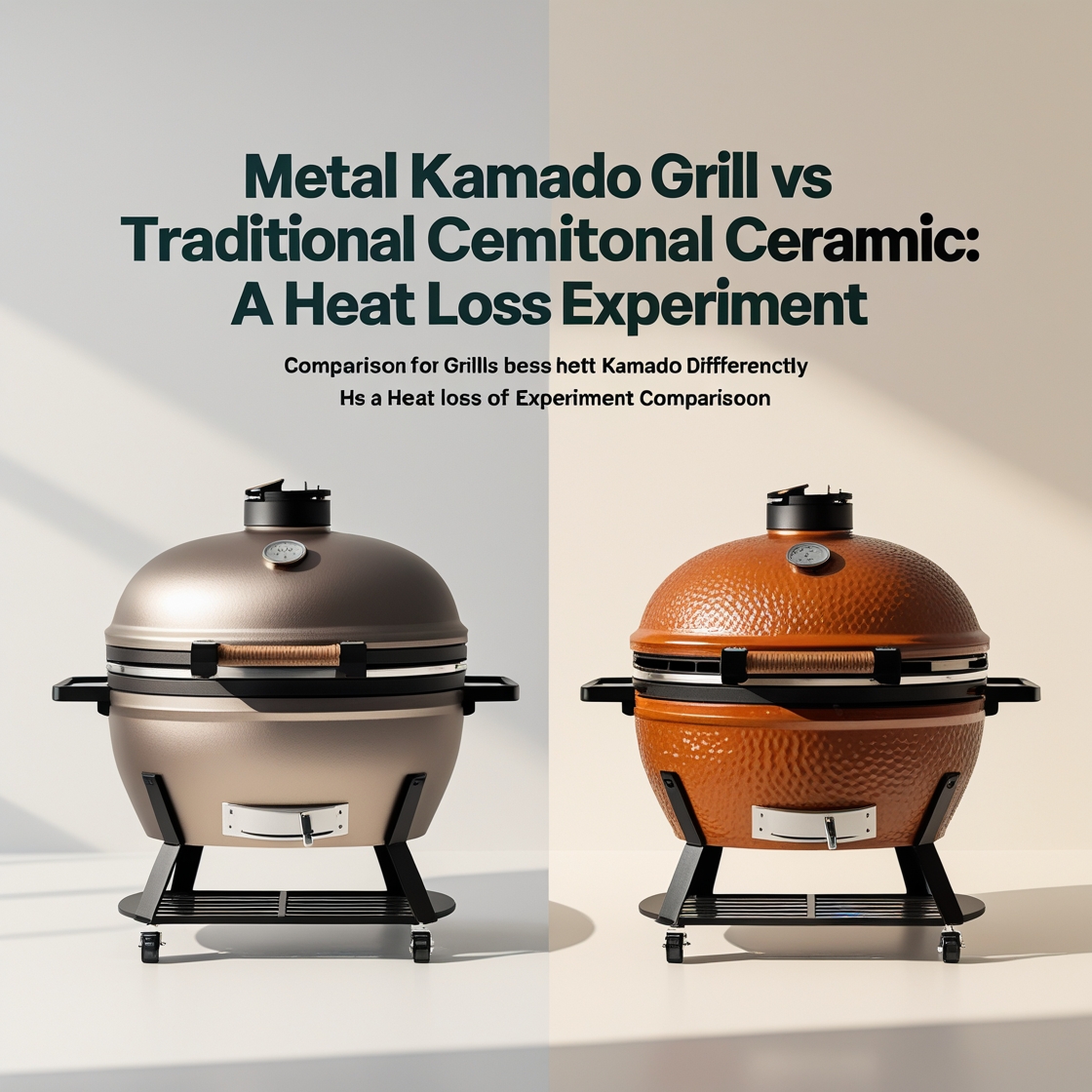
Experimental Conditions: Comparing Two Kamado Grills Under the Same Setup
To ensure the fairness of the experiment, we selected Kamado Grills of the same specifications, one made of metal and the other of traditional ceramic material. Both operated under the same ambient temperature (20℃), the same amount of fuel (2kg charcoal), and the same seclusion time (90 minutes). We recorded their fuel consumption and temperature fluctuations and ultimately compared the thermal mass loss rates.
Metal Kamado Grill: Fast Heating but High Heat Loss
The metal Kamado Grill, with its strong thermal conductivity, showcased a rapid heating advantage during the preheating phase. However, during the experiment, we found its heat retention ability to be weak, with rapid heat dissipation. Within 90 minutes, fuel loss reached12%. This means that during long periods of grilling, the metal Kamado is more prone to losing heat and requires frequent charcoal replenishment.
Traditional Ceramic Kamado Grill: Slow Heating but Better Heat Retention
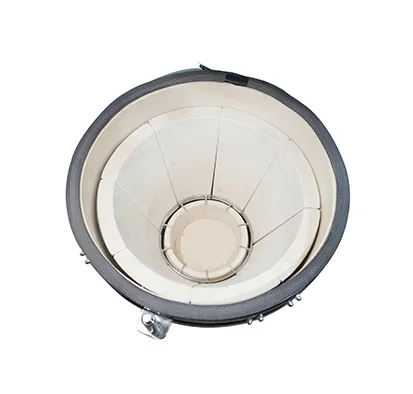
In contrast, the traditional ceramic Auplex Kamado Grill heats up slightly slower, but its heavy ceramic structure excels in heat retention. The experiment showed that the ceramic Kamado's fuel loss rate was only 6%, making its insulation effect twice as good as the metal model. This makes it more suitable for low-temperature slow grilling, long-time stewing, or smoking recipes.
If you prioritize quick grilling, the metal Kamado Grill is more convenient and efficient; but if you value fuel conservation and temperature control stability, the traditional ceramic Kamado Grill is undoubtedly the better choice.